A2 French: Grammatical Gender
Learning gender more gentler

Every French noun has a grammatical gender: masculine or feminine. In English, grammatical gender only applies in limited cases, such as actor/actress. Grammatical gender in English is nowhere near as comprehensive as French, whose grammatical gender can seem arbitrary and - because of the Romans - often is. To take one absurd example, in French a bike is masculine (un vélo), but a bicycle is feminine (une bicyclette). Feminism, the political movement, is masculine (le féminisme). Meanwhile, masculinity is grammatically feminine (la masculinité). Nor is it consistent - the afternoon (l'après-midi) can be either masculine or feminine. There's no rhyme or reason to it.
Grammatical gender is a core element of French because it determines the phrase's article, adjective, and pronouns. For example, masculine nouns take the indefinite article un, and feminine nouns take the indefinite article une.
Un petit bureau. A small desk.
Une petite table. A small table.
It helps to memorise each French noun with its indefinite article: un or une. This may feel unnatural at times because some nouns don't often use the indefinite article; for example, une liberté and une santé are uncommon; they're usually la liberté and la santé. However, indefinite articles are better for learning gender than the definite articles la or le because those become l' before a vowel or a silent h, and they become les in the plural form. Whether it's l' or les, the gender is hidden, so they're unreliable for memorising gender.
L'arbre is masculine, but you can't tell because of the contraction.
L'école is feminine and you can't tell either because of the contraction.
Les appartements is plural, so it's impossible to tell.
Un arbre, une école, un appartement are better for memorising gender.
French dictionaries usually indicate a word's gender with nm (nom masculin) and nf (nom féminin). However, even without a dictionary you can sometimes guess the grammatical gender. One strategy is to infer the gender from another Romance language. If you know Romanian, Italian, Spanish or Portuguese, there's a decent chance that the French word shares the same grammatical gender. However, it's not guaranteed! For example, a tooth is feminine in French (une dent), but masculine in Spanish (un diente); in French, milk is masculine (un lait), but Spanish milk is feminine (una leche).
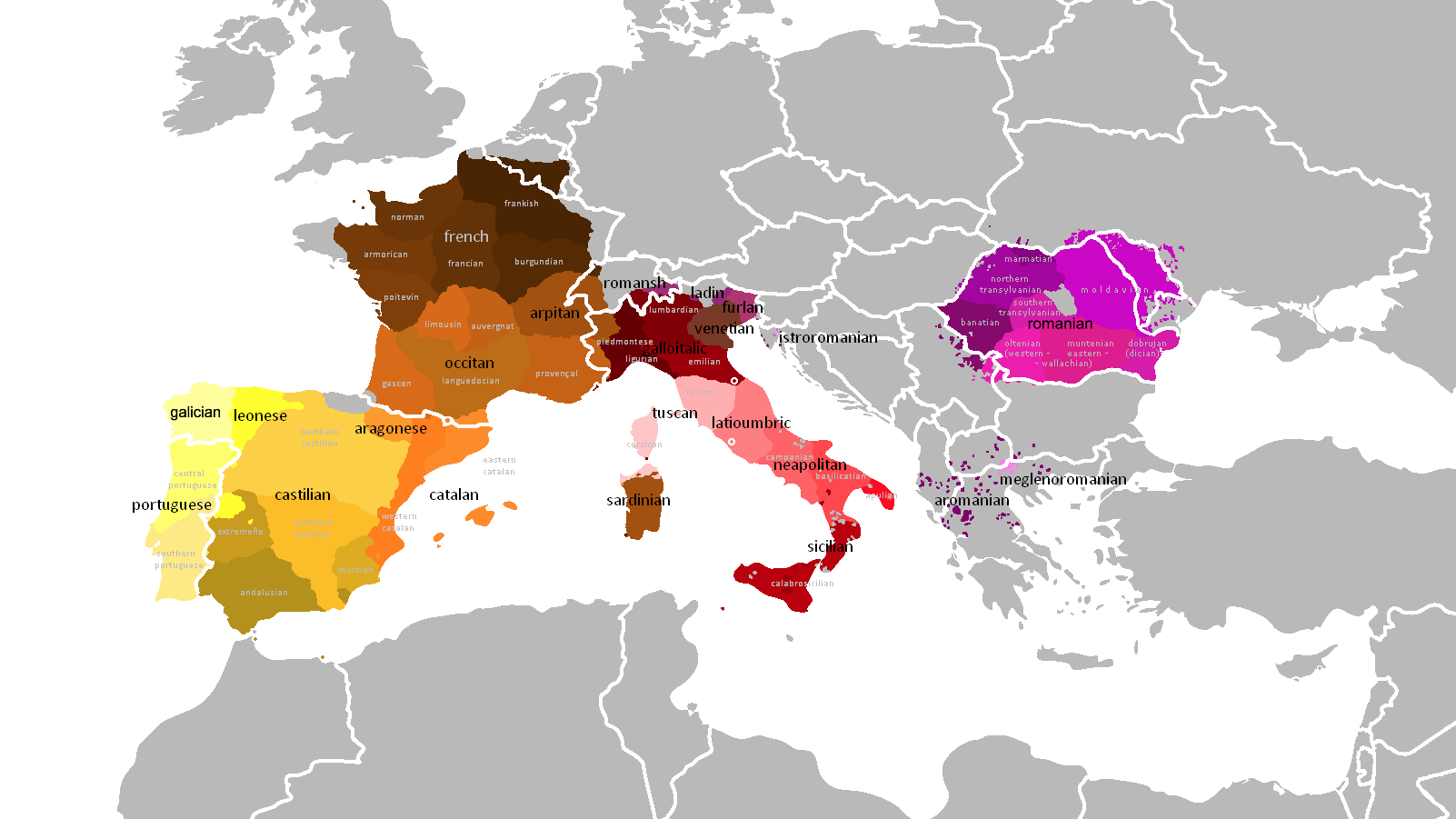
If you don't speak another Romance language, then fear not; you can pick up clues as to the grammatical gender from the French noun itself ...
The ending often tells you the gender
Another technique is to infer the gender from the noun's last letters because there are statistical regularities that help you make an informed guess. This strategy is not foolproof because each 'rule' has exceptions. Nonetheless, it's often easier to learn the rule and its exceptions than to memorise every noun individually. These patterns are:
Usually feminine
- -tion and -sion, e.g. une nation, une télévision. There are almost no exceptions, but be careful. The -tion rule does not apply to all -ion nouns, so un avion, un camion and un million are masculine, for example.
- -ette, e.g. une fourchette, une cigarette. There are almost no exceptions.
- -ure, e.g. une voiture, une culture. Few exceptions.
- -té, e.g. une liberté, une santé, except un été, un côté and un pâté.
- -ée, e.g. une idée, une journée, except un musée and un lycée.
- -ance and -ence, e.g. une chance, une différence, except un silence.
Usually masculine
- -isme, e.g. un tourisme, un journalisme.
- -ème, e.g. un problème, un système, un thème, except une crème.
- -ment, e.g. un moment, un appartement, except une jument (a.k.a. a mare; and a word you'll probably never use unless you love horses).
- -age, e.g. un fromage, un voyage, except une page, une plage, une image, une cage, une nage, une rage.
- -eau, e.g. un bateau, un gâteau, except une eau and une peau.
Some things are inherently masculine
Days, months, seasons and languages are masculine, whatever their ending, e.g. un lundi, un printemps, le français. Remember that the next time you visit la Corse (Corsica) where they speak le corse (Corsican). This is also why un été breaks the rule that -té endings are usually feminine; the season's the reason.
The rule is not absolute. Days and months are masculine, but a week is feminine (une semaine), and a year is masculine as un an but feminine as une année.
Not every noun ending in -e is feminine
Many learners think that there is a rule that nouns ending in -e must be, or almost always are, feminine. This is not the case; many masculine nouns end in -e, for example:
Un livre, un verre, un rêve, un monde, un groupe, un modèle, un rôle, un silence, un musée, un lycée, un problème, un système.
To the extent that -e ending nouns tend to be feminine, it's usually because words ending in -ée, -ance, -ence, -ure and -ette are often feminine. Outside of those patterns, an -e ending on its own is a weak signal. You have to learn the gender of those words one by one; sorry.
Some nouns change meaning with gender
Some nouns exist in both genders and mean something different depending on their gender:
Un livre (a book) / une livre (a pound, money or weight - often 500 grams).
Un tour (a tour, a turn) / une tour (a tower).
Un poste (a job, a position) / une poste (a post office).
Un mode (a method, a mode) / une mode (a fashion).
So you can have un livre (a book) or une livre (500 grams) or une livre de livres (500 grams of books). These dual-gender nouns are worth learning together in the same way that English speakers learn their, there and they're together.
Adjectives agree with the noun
In French, adjectives change their spelling to reflect the gender of the noun they describe. Masculine nouns get masculine adjectives, and feminine nouns get feminine adjectives. For many adjectives, you simply add -e to the masculine to make it feminine:
Un manteau vert. Une robe verte. A green coat, a green dress.
Un magasin fermé. Une porte fermée. A closed shop, a closed door.
If the masculine adjective already ends in -e, then nothing changes: un livre rouge is the same adjective as une voiture rouge. The same goes for many other adjectives like jaune, rapide, facile and jeune; they have the same spelling in both genders.
Some adjectives follow a pattern based on their ending, so you can infer the spelling of one gender if you know the spelling of the other:
- -eux → -euse = heureux (m.) → heureuse (f.).
- -if → -ive = sportif → sportive.
- -er → -ère = cher → chère.
- -on → double the last consonant and add an 'e' = bon → bonne.
- -en → double the last consonant and add an 'e' = italien → italienne.
- -et → double the last consonant and add an 'e' = muet → muette, except terms like complet → complète, concret → concrète, etc.
- -el → (you guessed it) double the last consonant and add an 'e' = naturel → naturelle.
Some adjectives, however, are irregular. There is no rule for how the genders are spelt differently. You just need to memorise the masculine and feminine forms individually, e.g.
- blanc (m.) → blanche (f.).
- long → longue.
- gros → grosse.
- beau → belle.
- nouveau → nouvelle.
- vieux → vieille.
Perplexingly, "masculine" and "feminine" can be used as adjectives and must agree with the gender of the noun. For example, un prénom (a name) is a masculine noun. If you say that someone has un prénom féminin (a feminine name), then the adjective féminin must agree with the masculine noun (un prénom) by taking the masculine form; notice that it's féminin, not féminine?
Most adjectives go after the noun
In English, the adjective almost always comes first: the old dogs played with a red ball. English contains some exceptions, for example, it's Governors General, not Governor Generals. Nonetheless, English speakers can rest easy that most adjectives come before most nouns.
In French, the adjective usually comes after the noun. For example, colours, nationalities, shapes and past participles go after the noun:
Une voiture verte.
Un film italien.
Une table ronde.
Une porte ouverte.
However, some adjectives go before the noun, not after. These adjectives are the ones that describe beauty, age, goodness and size, which is easy to remember as BAGS:
- Beauty = beau, joli.
- Age = jeune, vieux, nouveau.
- Goodness = bon, mauvais.
- Size = grand, petit, gros.
Un petit village.
Une jolie maison.
Un bon restaurant.
Une vieille voiture.
The position doesn't change the gender agreement. A BAGS adjective in front of a feminine noun is still feminine: it's une petite maison, never une petit maison, etc. The exception is when a masculine adjective goes before a masculine noun that starts with a vowel or silent h. Then the adjective takes on a modified masculine form to preserve the liaison between the end of one word and the start of the next. For example, beau, nouveau and vieux become bel, nouvel and vieil:
Un bel homme.
Un nouvel appartement.
Un vieil arbre.
There are also instances when an adjective can go either before or after the noun. If so, the position of the adjective changes the adjective's meaning. We don't have time to get into that, however, because this explainer is long enough as it is. For now, I recommend you go back to the top of the page and practise le genre grammatical.